


You grab a bottle, you scan the label, you wonder if they’re interchangeable.
They’re not, and your stir-fry will suffer for the swap.
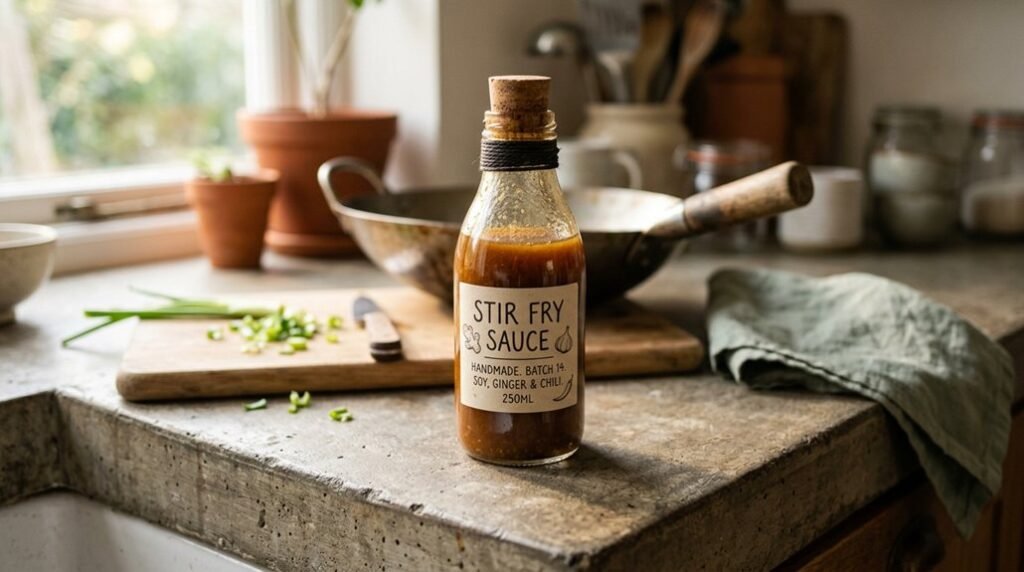
Stir-fry sauce brings thick, umami-heavy intensity with garlic and ginger that clings aggressively at 450°F.
Teriyaki offers a lighter, sweeter glaze with mirin and soy that turns lacquered and glossy when brushed on late.
One coats, the other shines, and choosing wrong means the difference between dinner that sings and dinner that cloys.
You’ll want to know which is which before you heat the pan.
Out of Teriyaki? Use Stir Fry Sauce Instead
What do you do when you’re halfway through prepping dinner and realize the teriyaki bottle’s empty? You grab a stir-fry sauce from the pantry and make it work. As a teriyaki substitute, you’re looking for that glaze consistency that clings to chicken or tofu without turning cloying. Most stir-fry sauces demand attention to sweetness balance.
KA-ME delivers serious umami with mushroom depth and visible scallions, though you’ll likely need a teaspoon of honey to approximate teriyaki’s shine. Trader Joe’s General Tso brings thick, slow-burning heat and tangy backbone. You’ve got to taste and adjust; it’s never one-to-one. Thin sauces coat poorly, thick ones (looking at you, Kung Pao) pour like molasses. Your stir-fry sauce becomes teriyaki through patience and tweaks, not miracles.
Recommended Products

𝐄𝐧𝐣𝐨𝐲 𝐫𝐞𝐚𝐥, 𝐜𝐫𝐨𝐰𝐝 𝐩𝐥𝐞𝐚𝐬𝐢𝐧𝐠 𝐠𝐢𝐧𝐠𝐞𝐫 𝐬𝐭𝐢𝐫 𝐟𝐫𝐲 ?𝐥𝐚𝐯𝐨𝐫 𝐰𝐢𝐭𝐡 𝟎 𝐦𝐠 𝐬𝐨𝐝𝐢𝐮𝐦 𝐩𝐞𝐫 𝐬𝐞𝐫𝐯𝐢𝐧𝐠 – Hit your sodium goals and still look forward to dinner. With ginger, onion, garlic and rare spices, this organic ginger stir fry sauce from Mr. Spice delivers wok-style depth without the salty aftershock, letting you toss chicken, shrimp, and crisp vegetables confidently. Built to be a low sodium stir fry sauce from the start, it gives you the bite and finish you crave, turning low sodium eating into a nightly win.

What You Get: One 13.5 oz. bottle of P.F. Chang’s Home Menu Sesame Sauce


Three Ways These Sauces Actually Differ
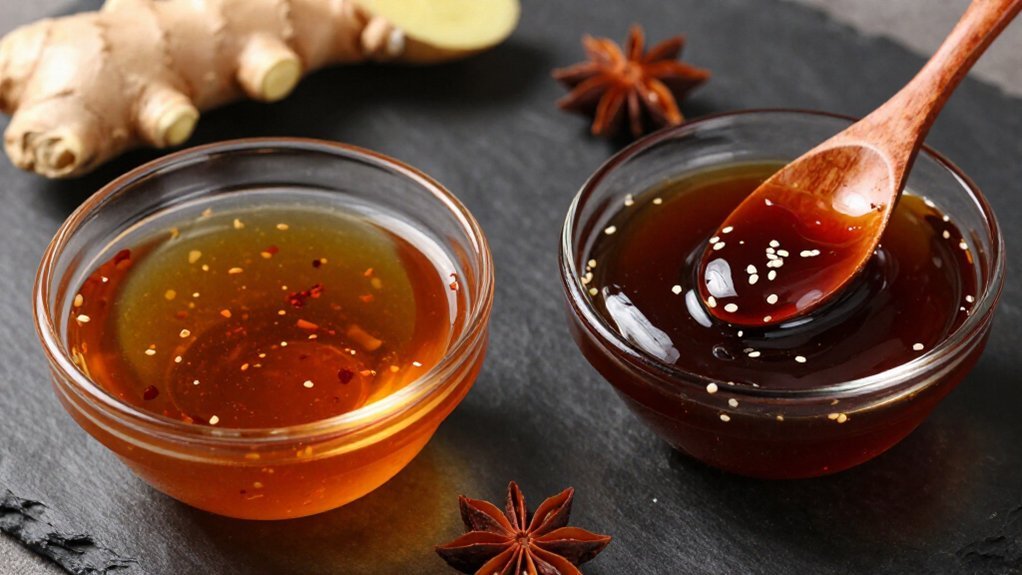
You’ll notice three clear battlegrounds where these sauces clash: flavor profile variations, ingredient composition differences, and culinary application distinctions.
Stir-fry sauces bring thicker, more complex layers, often packing garlic, ginger, and controlled heat that coats proteins without turning cloying, while teriyaki leans into a lighter, sweeter glaze where umami sugar takes center stage and spice barely shows up. Your cooking method matters too; you’re either finishing with a thin teriyaki glaze at the end or driving a heartier stir-fry sauce through the entire high-heat coating process.
Recommended Products

10 oz organic teriyaki sauce

THE ORIGINAL JAPANESE BBQ SAUCE FLAVOR: A rich, savory-sweet Barbecue Sauce that’s teriyaki-style and full of umami, crafted with soy, mirin, ginger, garlic, and green onion for an authentic Japanese flavor.

A tangy, irresistible sauce that adds a distinct sweet n' Sour Asian flair to your meal, Primal Kitchen no soy teriyaki sauce is an Uncompromisingly delicious condiment to savor every bite
Flavor Profile Variations
How do these sauces actually set themselves apart when you taste them side by side?
When you dip your spoon into teriyaki, you’ll notice that sweet-savory balance hitting first, a glaze-like sweetness that carries genuine aroma variability. The umami depth isn’t shy either, especially in profiles like KA-ME, where you’ll find a lighter tan color and that distinct non-sugary, umami-forward flavor. This isn’t just sugary gloss masquerading as complexity.
Now grab your stir fry sauce, and you’ll immediately feel the difference in thickness. Where teriyaki stays pourable to thin, stir fry sauce brings serious viscosity to the party. You’re looking at reduced, clingy coating power designed for that lacquered finish.
Teriyaki glides; stir fry sauce grabs. One balances marinades with measured sweetness, the other delivers stickiness for final visual punch.
Ingredient Composition Differences
Where do these sauces really start to diverge? You’ll find the answer in what’s actually going into the bottle.
Stir-fry sauces build their foundation on soy sauce, sugar, and a broader arsenal of savory seasonings. You’re getting mushroom-seasoned aromatics, peppery notes, sometimes visible scallion pieces like in KA-ME’s version. The goal is a thick, coating-friendly glaze that clings aggressively.
Teriyaki takes a more restrained path. You’re looking at soy sauce, sugar or mirin/sake derivatives, and little else. That mirin/sake brings sweetness and depth without the clutter. The result is smoother, glossier, less confrontational.
Here’s where teriyaki loses me: it can turn cloying. That sugar-heavy balance lacks the umami complexity you need. Stir-fry sauces deliver more interesting, layered builds. Teriyaki plays it safe, and sometimes safe tastes boring.
Culinary Application Distinctions
Those ingredient gaps don’t stay theoretical, they play out hard when you’re actually cooking. You’ll notice stir-fry sauce clings aggressively to your veg and protein, building glossy, umami-heavy layers that refuse to slide off. It coats, it caramelizes, it wins.
Teriyaki, meanwhile, you’ll deploy earlier. Use it as a marinade, letting that mirin sweetness penetrate deep, or brush it on at the end for a lighter, almost pourable glaze. But here’s the catch: push teriyaki too hard and you’ll get something cloying, flat, sticky without substance.
Stir-fry sauce delivers complexity, garlic and ginger and chili working overtime. Teriyaki commits to singular sweet-savory notes. Both have their place, but only one earns that final, confidence-boosting drizzle.


Spot Stir Fry Sauce vs. Teriyaki on Bottle Labels
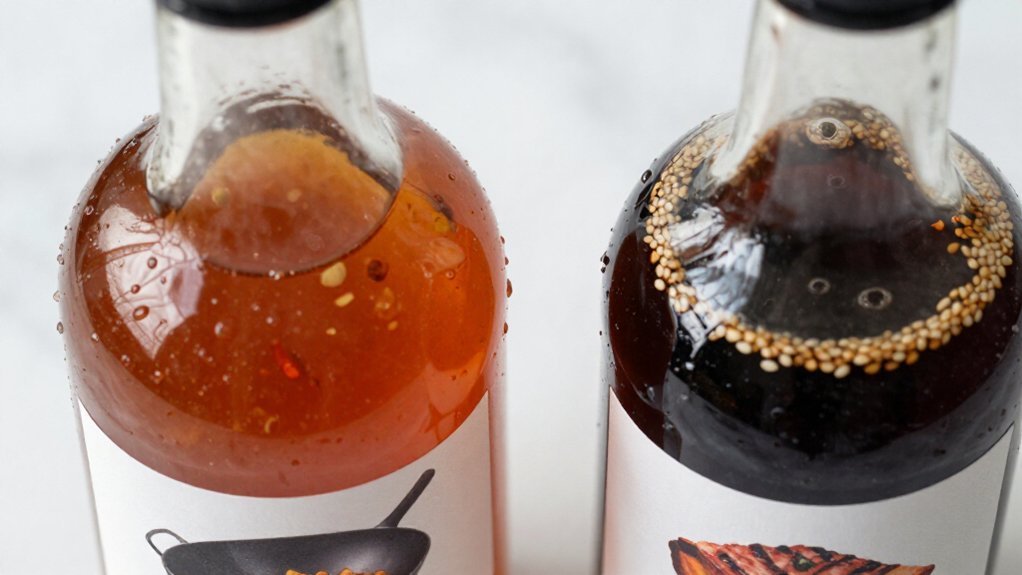
Why do some people grab the wrong bottle and end up with a cloying glaze when they wanted a savory coating? You need to read those Label cues carefully. Stir-Fry Sauce bottles emphasize “coating” and “versatile for multiple dishes,” while Teriyaki screams “glazing” and “sweet & savory.” That’s your first clue.
Check the ingredient highlights too. You’ll spot soy sauce, sugar, and mirin on Teriyaki labels, signaling that thicker, clingier consistency. Stir-fry sauces highlight soy-based umami without the heavy sweetening push.
The thickness expectations differ: Teriyaki often flat-out calls itself a glaze, while stir-fry sauce promises something pourable for your screaming-hot wok. Even bottle sizes hint at positioning, some teriyaki brands clocking in under 8 ounces versus family-sized stir-fry options. Master this, and you’ll never confuse Glaze vs. Coating again.
Recommended Products

No hydrogenated fats or high fructose corn syrup allowed in any food

No hydrogenated fats or high fructose corn syrup allowed in any food

🥢 ELEVATE STIR-FRY: Elevate your stir-fry with Oriental Wok's Sesame Stir-Fry Sauce. Crafted from an authentic family recipe, this sauce transforms meals. With rich, complex flavors and perfect sweetness, it enhances chicken, shrimp, steak, or tofu for irresistibly delicious dishes.


Cook Fast: Best Uses for Stir Fry Sauce
How exactly do you turn a weeknight dinner into something that tastes like you planned it for days? You grab a stir fry sauce that’s thick enough to cling, not pool.
Quick cooks demand coatings that work fast, and that’s where these sauces shine. They’re designed for high-heat moments, thicker than standard teriyaki so they adhere to vegetables and proteins without sliding off into a soupy mess. You want that glossy coating that signals “I know what I’m doing,” even when you’re just salvaging limp broccoli and last night’s chicken.
Trader Joe’s General Tso at $3.49 for 12.35 ounces gives you room to experiment; KA-ME’s smaller $5 bottle demands restraint. Shake thicker sauces well, or you’ll fight the bottle while your wok smokes. Choose balanced sweet-savory profiles, avoid anything cloying, and let the umami do the heavy lifting.
Recommended Products
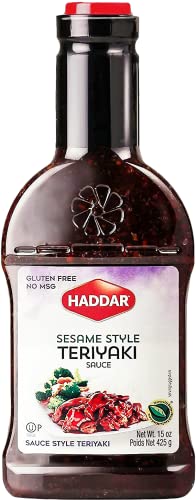
SWEET & TANGY - Haddar Rich and thick sesame style Teriyaki sauce makes a great chicken, meat or fish Marinade. Also great for Dipping.

FUNTABLE TERIYAKI SOY SAUCE (380g/13.4 oz): Step into the world of sweet & savory teriyaki with a sauce that complements any dish. This sauce boasts the right consistency - neither too runny nor too sticky, making it an exceptional choice for marinating, cooking, dipping, glazing, or drizzling. It strikes the balance between sweet and savory, appealing to taste buds of all ages

SWEET & TANGY - Haddar Rich and thick sesame style Teriyaki sauce makes a great chicken, meat or fish Marinade. Also great for Dipping.


Build Glaze: When Teriyaki Wins
When you’re building a glaze that actually sticks, teriyaki’s higher sugar content gives you the edge you need, caramelizing into that glossy, lacquered finish without turning cloying or gummy. You’ll notice how the balanced sweet-soy umami reduces down quickly, maybe two to three minutes of gentle simmering, clinging to chicken thighs or salmon fillets with a precision that stir-fry sauces, thicker and more utilitarian, simply can’t match.
It’s not that stir-fry sauce loses every time, but for that polished restaurant sheen, you’re reaching for teriyaki every single time.
Recommended Products

Includes one 11.5 oz bottle of HOUSE OF TSANG Classic Stir-Fry Sauce to make your next meal extra delicious and flavorful

A blend of Kikkoman soy sauce, sesame oil, garlic, oyster sauce, and Asian seasonings
Sugar Content Impact
What’s the real secret behind that glossy, restaurant-quality glaze clinging to your stir-fry? You guessed it: sugar content. When you reach for teriyaki, you’re grabbing a sauce built for caramelization. That sweetness isn’t cloying; it’s functional. The sugars hit your hot pan, bubble, and change into a lacquered glaze that actually sticks to your proteins.
Stir-fry sauces? They’re often umami-forward, soy-drenched, and sadly glaze-less without cornstarch rescues.
Here’s what sugar does for your dinner:
- Caramelizes fast under high heat
- Creates natural thickness without additives
- Delivers that sticky, finger-licking finish
- Outlasts savory sauces on your plate
KA-ME and San-J teriyaki variants prove this with syrupy textures that cling beautifully. Panda Express Kung Pao tries, but lands gooey. You’ll notice the difference immediately: teriyaki’s glaze persists; stir-fry’s coating disappears.
Glaze Formation Properties
Sugar gets you halfway to glory, but glaze formation seals the deal. When you want that lacquered shine, teriyaki glaze delivers through thickening and controlled caramelization.
You’ll notice teriyaki starts thinner, more pourable, while true glaze builds through higher sugar concentration and reduced liquids. That caramelization creates the sticky, glassy shell you’re chasing.
For coating adhesion that survives the plate, you need cornstarch, pectin, or reduced honey binding everything together.
Here’s where teriyaki falls short: it coats lightly, never quite clinging with the tenacity of a dedicated glaze. The flavor stays savory-sweet, sure, but the surface lacks that concentrated umami armor.
Change teriyaki yourself by reducing it hard, adding thickening agents, and brushing during the final two minutes. You’ll turn a decent sauce into something that actually sticks, shines, and satisfies without getting cloying.


Adjust Flavor: Tweaking Sauce for Any Recipe
How do you rescue a sauce that’s veering toward disaster? You grab the reins and adjust. Start with your soy base, then build. Too sweet? Cut it with rice vinegar. Too thin? Simmer or add cornstarch. You’re aiming for balance, not cloying sugar bombs or flat umami puddles.
For teriyaki flavor, you’ll lean into mirin and ginger for that glossy, pourable finish. Stir-fry sauces demand more body, more cling. The adjustment is simple: control your sweetener, mind your thickness.
Here’s your rescue kit:
- Thin thick sauces with water or vinegar; thicken runny ones with cornstarch slurry
- Balance soy with brown sugar, then add citrus or vinegar for brightness
- Boost complexity with garlic and chili, or keep it clean with ginger
- Match texture to purpose: glaze for pouring, cling for coating
Recommended Products

READY-TO-USE GARLIC GINGER FUSION – Kick up your dishes with a spoonful of Spice World Garlic Ginger Fusion Seasoning Blend.


8 Dishes Matched to Their Ideal Sauce
You’ve fixed your sauce, now you need to marry it to the right dish. Reach for stir-fry sauce when you’re building a coating for crisp-tender vegetables and proteins; its clingier texture grabs every surface, delivering complex heat and umami depth without turning cloying. San-J Spicy Hot Szechuan excels here, its mushroom notes and bold consistency worth the $5 for 7.1 oz.
Teriyaki demands different treatment. Use it as a glaze for grilled salmon or chicken thighs, where sugar concentrates into glossy, lacquered perfection. The sweeter, more pourable varieties create that signature sheen, while soy glaze finishes rice bowls beautifully.
Panda Express Kung Pao, at $5 for 18.75 oz, offers peppery punch for larger batches. Match thick to coating, syrupy to glaze; you’ll never confuse their roles again.
Recommended Products

Teriyaki marinade and sauce is great for adding to veggies, meat or chicken


Keep Both in Your Pantry (Here’s Why)
Why limit yourself to one bottle when your kitchen demands versatility? You need both pantry staples because they serve completely different functions. Stir-fry sauces deliver thick, clingy coating power for vegetables and proteins, while teriyaki offers lighter glaze potential with balanced sweetness.
- Stir-fry sauces coat aggressively, building umami-rich layers during quick cooking without turning cloying.
- Teriyaki finishes beautifully, giving proteins that signature sheen without heavy texture.
- You control thickness, choosing coating versus glaze based on your dish’s needs.
- Availability favors you, with KA-ME and Trader Joe’s stir-fry options reliably stocked while specialty teriyaki wok sauces fluctuate.
Don’t settle for one-dimensional meals. Stock both, and you’ll never compromise between proper coating and delicate glaze again.
Recommended Products

Made using 8 fruits and vegetables for a complex, savory flavor that's unmatched

SPICY, SAVORY & SWEET: Drizzle the spicy, savory, and sweet flavors of this delicious sauce for unforgettable meals at home.