


You think stir fry is fast food, but you’re probably doing it wrong. Most home cooks crowd the pan, steam their vegetables into mush, and drown everything in cloying sauce.
The fix is simpler than you think: fifteen minutes, screaming-hot carbon steel, and mise en place that actually happens before you cook. You’ll spend $12 on vegetables that outshine any $30 takeout, and you’ll taste the difference in every crisp-tender bite.
The real secret isn’t speed, it’s sequence. Want to know why your broccoli goes limp while your chicken stays raw?
Pick Your Pan and Prep Everything First
Why does your stir fry turn out soggy when the restaurant’s crackles with char? You’ve skipped the mise en place, and your wimpy skillet’s stealing your thunder.
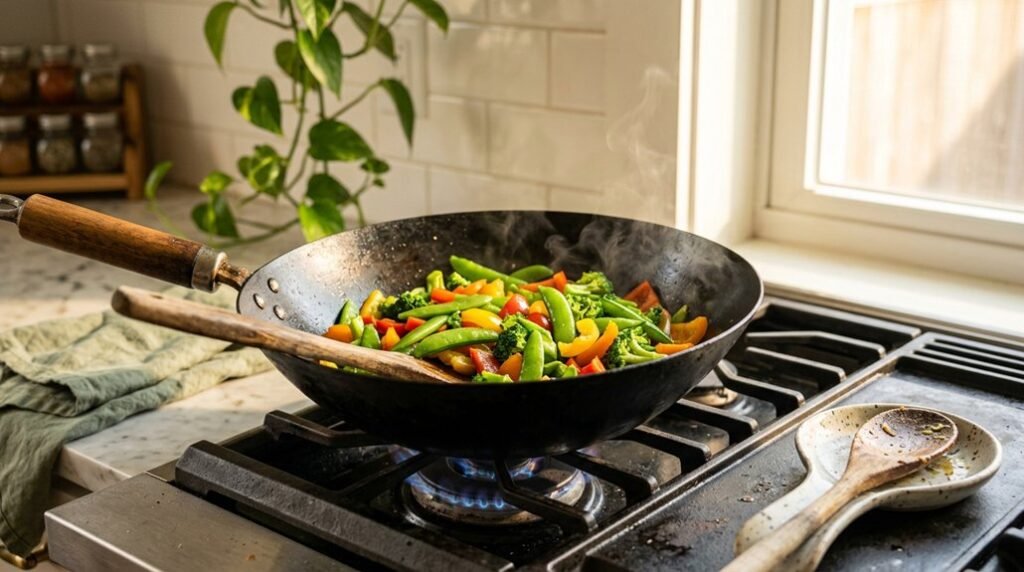
Grab a high-heat pan, a screaming-hot cast iron or carbon steel wok. You need that blistering surface for proper searing, not a soupy steam bath. Heat it until the oil shimmers, almost smoking, then you’re ready.
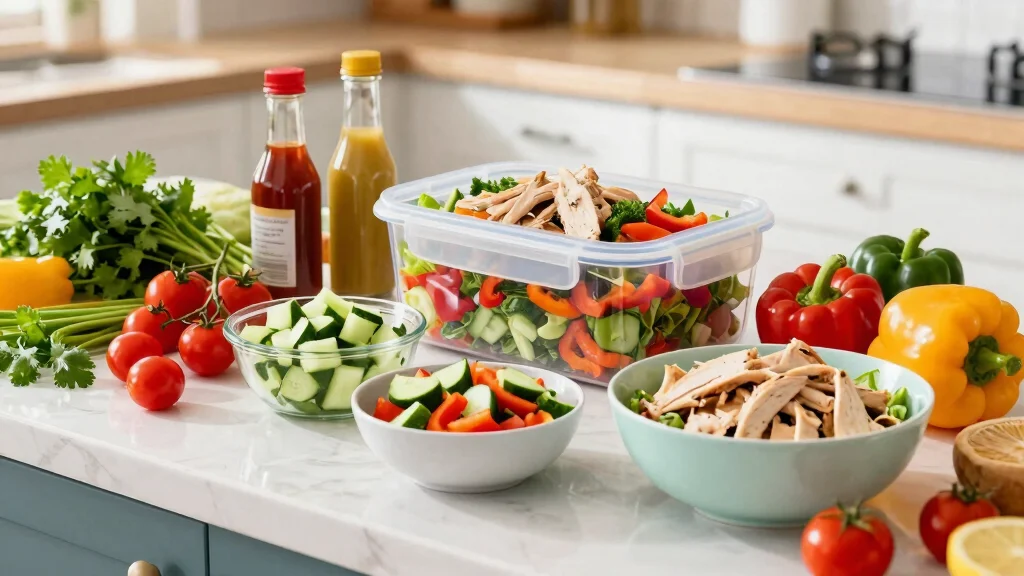
Your prep makes or breaks this. Slice protein into even bite-sized pieces, mince your aromatics, and cut those uniform veggies, bell peppers and snap peas, into matching sticks so nothing turns to mush while something else stays raw. Staggering sizes ruin quick-fry cooking.
Keep your soon-to-be-prepped ingredients in tiny bowls, restaurant-style. It’s obsessive, but you’ve got fifteen minutes; you can’t pause to hunt the soy sauce.
Recommended Products
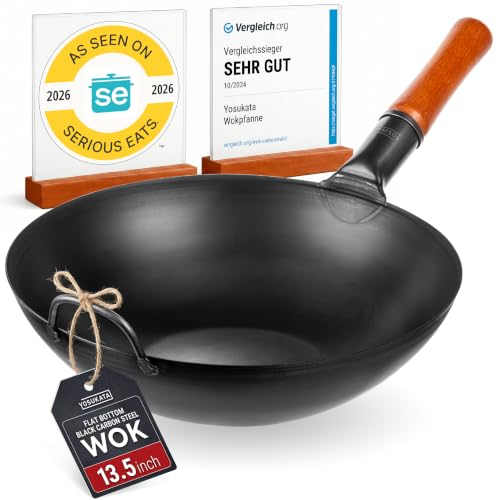
GENUINE TASTE: Bring authentic wok flavor to your kitchen or outdoor cooking with the YOSUKATA 13.5” flat-bottom carbon steel wok. Designed to lock in juices and flavors, this deep wok pan is ideal for preparing Chinese, Japanese, Thai, and other Asian dishes — the perfect fried rice pan for home or professional use

GENUINE TASTE: Bring rich, traditional Asian flavors to your kitchen or campsite. The YOSUKATA 14-inch carbon steel authentic wok with round bottom is specially crafted to lock in moisture and flavor. Ideal for Chinese and Japanese cuisine, this xl wok is designed for use as a camping wok, open fire cookware and BBQ wok

🔥 READY TO USE, ZERO COATING NON-STICK: Skip the complicated seasoning process! Our Sanho wok is pre-seasoned using advanced micro-nano technology, creating a durable, 0-coating physical non-stick surface right out of the box. Unlike traditional woks that rely on PTFE or PFOA-based chemicals, our wok is 100% non-toxic. Just rinse, heat, and cook – it’s that simple. The non-stick performance will only improve with proper care, becoming your most reliable kitchen companion


Make the Sauce While the Pan Heats
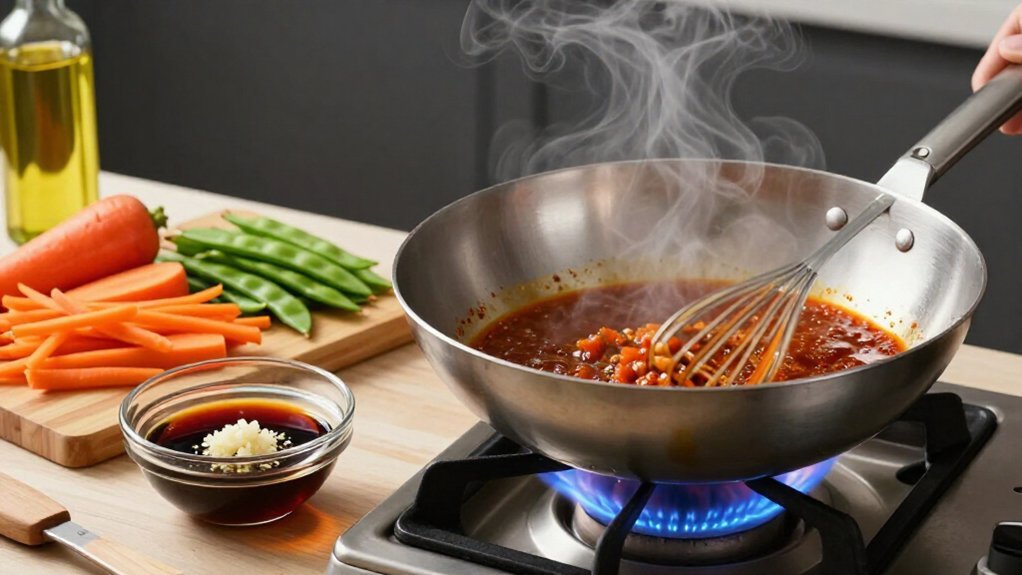
Your mise en place is lined up, your wok’s starting to smoke, and you’ve got maybe ninety seconds before that metal’s ready for action. That’s your window to whip up your stir fry sauce.
Your mise en place is lined up, your wok’s starting to smoke, and you’ve got maybe ninety seconds before that metal’s ready for action.
Grab a bowl or jar and pour in ¼ cup soy sauce, or swap for coconut aminos if you’re keeping it gluten free. Add ½ to ¾ cup stock for body, then brighten the umami with 1 to 2 teaspoons each of ground ginger and minced garlic. A teaspoon of honey prevents cloying sweetness.
Toss in your cornstarch slurry, 1 to 2 teaspoons dissolved in cold water, and give it a quick whisk or shake. This ain’t fancy technique, it’s survival.
Your sauce sits ready, waiting to coat hot ingredients with that glossy finish. Pan heat waits for no one.
Recommended Products

Maximum Heat Output: Experience powerful cooking performance with up to 100,000 BTU from this heavy-duty natural gas jet burner. Runs well at low pressure. Perfect for Chinese wok cooking, outdoor grilling, and versatile cooking styles
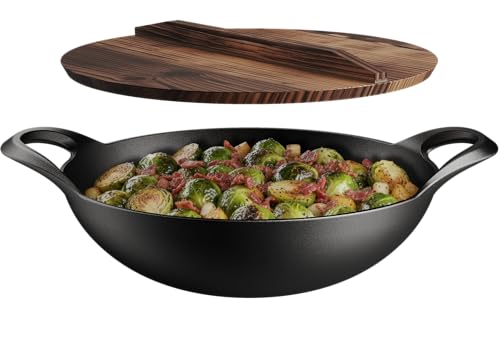
UNMATCHED HEAT RETENTION - Cook with confidence! This thick-walled cast iron wok with lid holds and distributes heat like a pro, so every stir-fry, sear, or simmer comes out evenly cooked and full of flavor no cold spots.

High Output: Delivers 100,000 BTUs for efficient and powerful cooking.


Cook Vegetables by Density: Hard to Tender
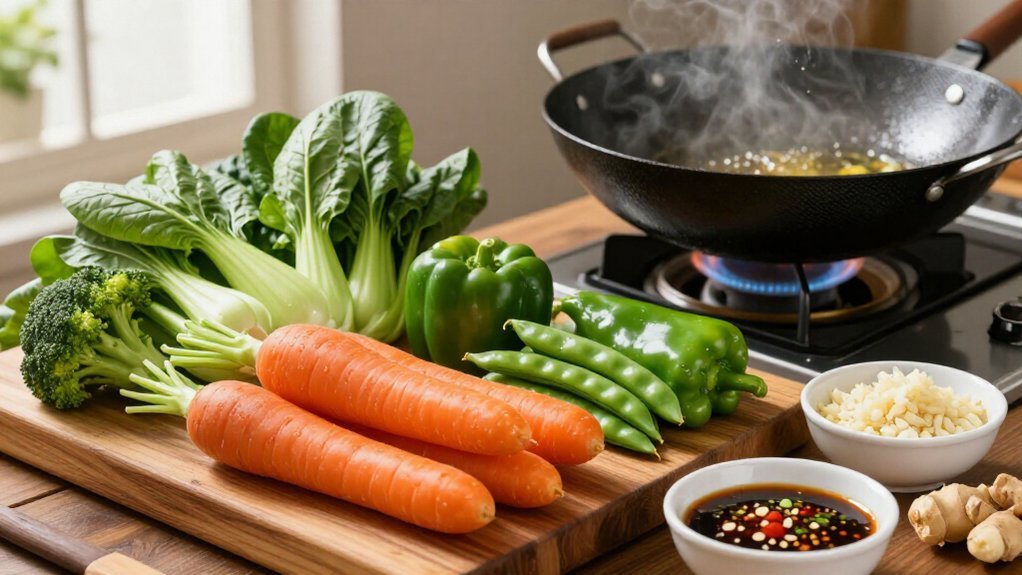
Because your wok’s screaming hot now, it’s time to put some vegetables in actual danger. Toss in dense candidates first: broccoli florets, carrot coins, anything that’ll dent your skull. These hard vegetables need the head start. Wait one, maybe two minutes, then introduce the soft crew. Bell peppers, mushrooms, zucchini; they’ll dissolve into cloying mush if you blink.
Keep everything dancing in high heat. Constant motion equals even browning: no sad, steamed patches, no umami left locked inside. You’re chasing that 3–4 minute finish line where every piece hits crisp-tender perfection. Timing’s everything here; density dictates your sequence, not whim.
Near the end, spear a broccoli stem with your fork test. It should yield with gentle pressure, still resisting, never collapsing. That’s your signal: vegetables rescued from danger, ready for protein.
Recommended Products

Made of strong, clear glass with thick rim

Okllen stainless steel bowl each measures 6 1/2 inch in upper diameter, 2" in depth. With 0.75 Quart capacity, perfect to mix salads, marinate meat for baking or grilling, make tasty sauces and dressings, and more.

MULTITASK: Prep, store, & serve food for every meal


Sear Thin-Sliced Protein in 2 Minutes
How do you turn raw protein into something worth eating in the time it takes to tie your shoes? You sear thin-sliced protein at high heat, and you don’t overthink it.
Start with uniform slices, about a quarter-inch thick. Anything thicker betrays your 2-minute promise, leaving you with gray, cloying rubber instead of caramelized edges. Preheat your cast iron or wok until it smokes slightly, add one tablespoon of oil, and watch for that shimmer. That’s your cue.
Uniform slices, smoking-hot pan, shimmering oil—your cue to stop thinking and start searing.
Lay the slices in, avoid crowding, and batch cook if needed. Steam is the enemy of umami here. Sear each side for one to two minutes until the edges turn opaque and lightly browned.
Remove the protein, rest the protein briefly, then return it to the pan with sauce and vegetables. Your quick dinner just got respectable.
Recommended Products

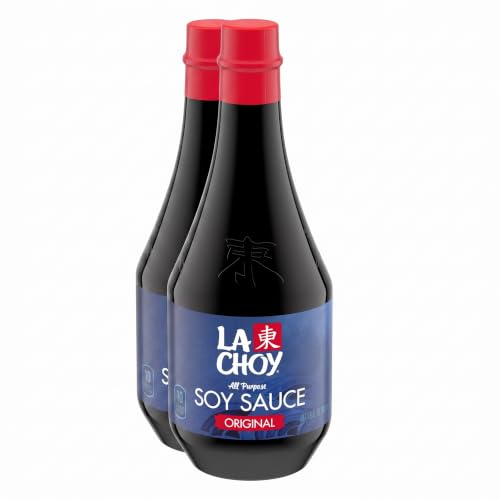
10 oz organic reduced sodium shoyu soy sauce

AUTHENTIC FLAVOR: You can experience the authentic and rich umami flavor that Kikkoman Soy Sauce is renowned for that enhances the taste of variety of dishes. The sauce also contains an appetizing smell.
The information below is per-pack only


Finish, Serve, and Store Without Soggy Results
Why does the final minute matter more than the first fourteen? Because this is where cloying disaster or umami perfection gets decided. You’ll add your stir-fry sauce and watch for sauce thickening, about 1 to 2 minutes, keeping those tender-crisp vegetables from turning to mush.
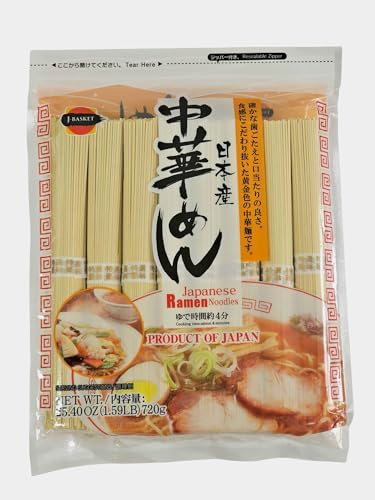
Return your protein and noodles to reheat evenly, giving everything a final toss that coats each piece in glossy, savory glaze. To prevent sogginess, you’ve already nailed high heat searing; now don’t drown your work. Remove excess liquid if it pools.
Garnish with green onions and sesame seeds. The crunch, the color, the aroma: that’s the win.
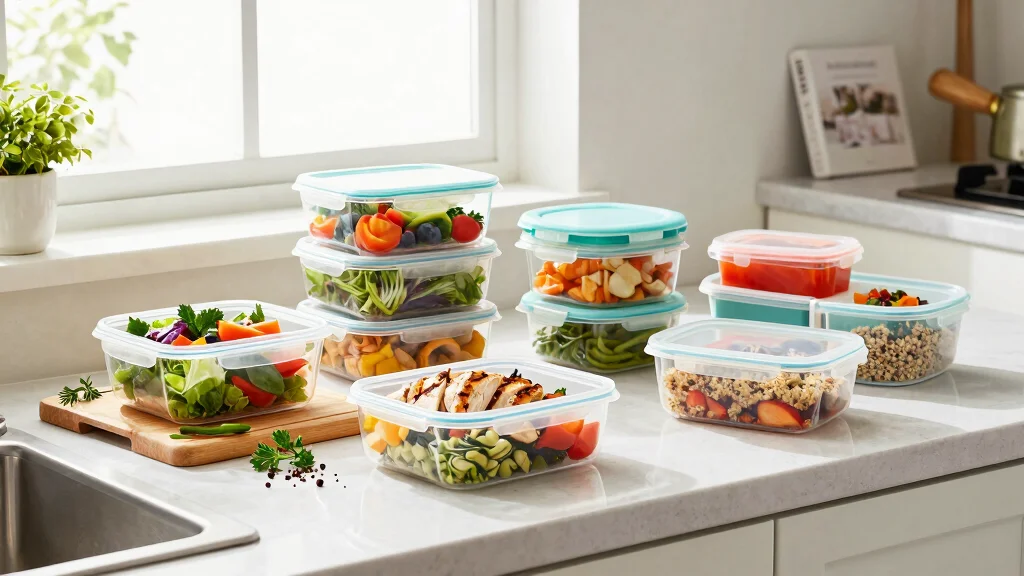
For proper storage, refrigerate up to 4 to 5 days. Reheat in a skillet with a splash of stock. Soggy leftovers are for losers.
Recommended Products

Your go-to wok utensils for easy and epic stir fry dishes and more
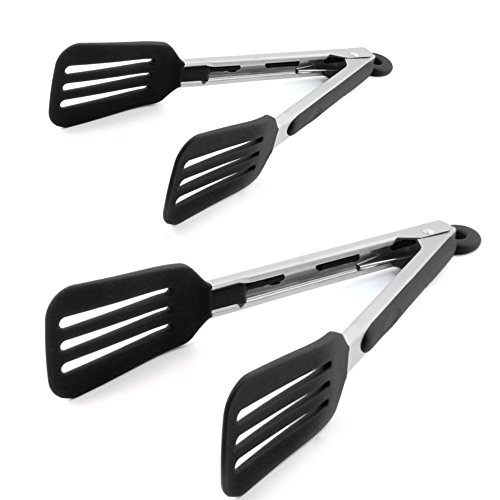
AMAZING LOCKING DESIGN FOR EASY STORAGE: The smooth ring pull locking mechanism allows you to close tongs for easy storage and prevents them jamming in your utensil drawer when you go to grab them,or hang them for convenient air-drying when not in use, making storage easier.

Helen’s Asian Kitchen Bamboo Wok Tool for stirring, mixing, dividing, tasting, turning, and serving foods