
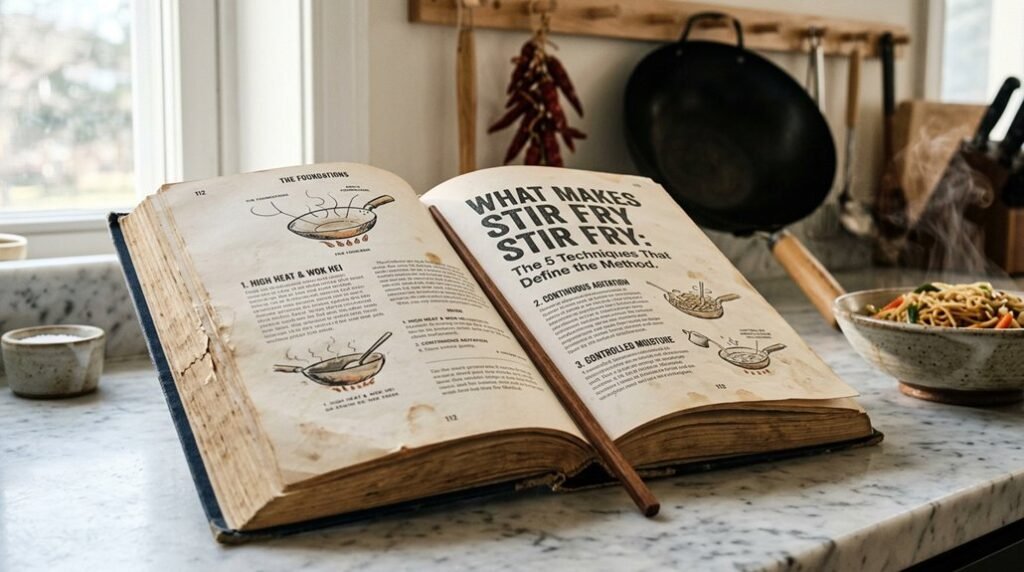


You probably think your home stove can’t match restaurant wok hei, that elusive charred aroma that defines great stir fry. You’re wrong, but only if you nail five specific techniques. Most home cooks crowd the pan, skip the slurry, or dump garlic in too early. The result is soggy vegetables and cloying sauces that pool at the bottom of the bowl.
Get these five moves right, though, and you’ll taste the difference immediately.
Start With a Screaming Hot Wok
The secret to stir fry that actually tastes like something, not just steamed vegetables with delusions of grandeur, starts with heat. You preheat your carbon steel wok until it’s a screaming hot wok, empty and dry, over high heat for three to four minutes. You’ll know it’s ready when water droplets vanish in two seconds, sizzling into nothing.
Then you add high-smoke-point oil, peanut or canola, about two tablespoons, and watch it shimmer. That wok hei, the breath of the wok, arrives as faint smoke wisps upward. This isn’t subtle; it’s the foundation of flavor.
You keep your prepped ingredients within arm’s reach, because once that oil hits, you’re moving. You add them in rapid succession, maintaining constant motion for quick sear and even cooking. No cloying steamed sadness here, just caramelized umami and actual texture.
Recommended Products
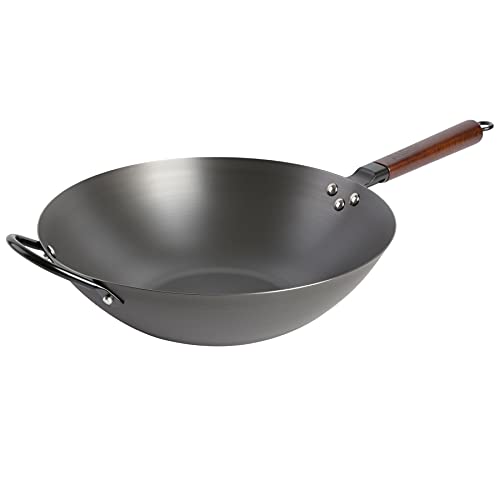
Consumer Reports Top Rated Wok 26': Babish 14 Inch Carbon Steel Wok (6" Flat Bottom)

PRE SEASONED & NONSTICK: Tired of rusty woks? SUMEIGUAN carbon steel wok is pre-cured and engineered with advanced Nitriding technology. This treatment fundamentally transforms the steel, creating a dense, molecular-level shield against rust. The result is a wok with exceptional resistance to rust, scratches, and corrosion—ready to cook right out of the box. Built to last up to 3 times longer than ordinary wok pans, this is the only wok you’ll need in your kitchen.

TRUE FLAVOR & VERSATILITY: The YOSUKATA 13.5” carbon steel wok with a flat bottom is specially designed to retain juices and enhance taste. Whether you're looking for a grill wok, BBQ wok, extra large wok, fried rice pan, or a professional authentic wok for home, outdoor, or restaurant use, it’s ideal for stir-frying, pan-frying, braising, deep-frying, searing, steaming, and even smoking. Discover the rich, true flavours of Chinese and Asian cuisine.


Stir-Fry Proteins First, Then Remove
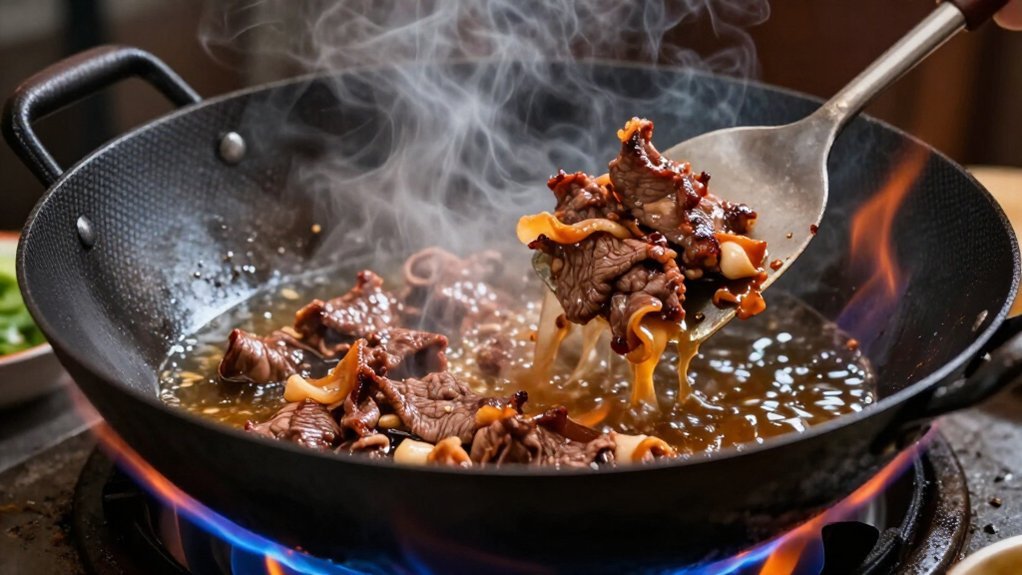
You always want to give your protein a proper head start, and that means searing it solo before anything else hits the wok. Preheating wok until it smokes isn’t negotiable; without that blistering foundation, you’re steaming meat, not building flavor. Stir-fry proteins first to develop serious browning, that Maillard magic that separates mediocre from memorable.
Separate cooking lets you manage heat precisely. You’re chasing caramelization, not boiling in released juices. Marinate beforehand for even seasoning that survives the sear; otherwise, you’re just coating the exterior with cloying sauce that burns.
Remove the protein at 80% doneness. Return protein later for gentle reheating during sauce integration, preserving texture. This high-heat cooking sequence demands patience, but the payoff is unmistakable: proteins that actually taste like something.
Recommended Products

Helen’s Asian Kitchen Bamboo Wok Tool for stirring, mixing, dividing, tasting, turning, and serving foods


SIZE MATTERS - The 16" carbon steel wok provides ample cooking space, allowing you to cook large quantities of food at once. It's ideal for stir-frying, deep-frying, and other cooking techniques that require a spacious cooking surface.


Cook Vegetables in Stages by Density
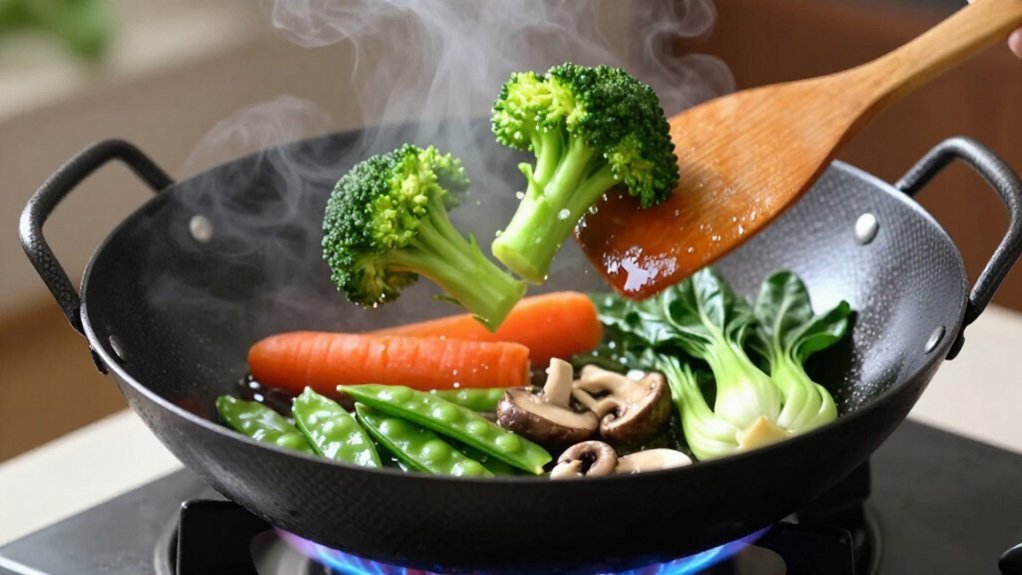
A wok isn’t a dumping ground for whatever’s wilting in your crisper. You’re cooking in stages by density, not playing vegetable roulette. Start with carrots, broccoli, peppers, those dense fighters needing real heat to surrender. Cut everything uniform bite-sized so density matches cooking time, moisture releases together, nothing turns cloying.
Succession matters. You’ll avoid crowding, work in batches if needed. That texture preservation you’re chasing, that crisp-tender snap, it dies in steamy crowds.
Crowding kills the snap. Work in batches, or surrender your crisp-tender trophy to steam.
Add a splash of water, cover briefly when transitioning densities: it gently coaxes the stubborn ones without brutalizing the delicate. Finish with spinach, bok choy off-heat, they need seconds, not sentences. Staged cooking isn’t fussy, it’s respect. Respect the ingredient, respect your mouth.
Carrots and broccoli first, bok choy in the final 60 seconds. Steam escapes only when you’re not drowning the pan in vegetables. That bright green on your plate is a trophy, not an accident.
Recommended Products

A blend of Kikkoman soy sauce, sesame oil, garlic, oyster sauce, and Asian seasonings

No hydrogenated fats or high fructose corn syrup allowed in any food

The information below is per-pack only


Layer Your Sauce at the Critical Moment
Once you’ve staged your vegetables to that crisp-tender sweet spot, you’re standing at the moment that separates decent stir fry from the kind that makes people linger at the table. Your sauce timing matters more than you’d think, because dump it too early and you’ve got a simmering mess, not a stir fry.
Add sauce after proteins hit that golden crust, then drizzle your pre-mixed, concentrated liquid down the hot sides of your high-heat wok. This preserves heat retention and keeps vegetables crisp, not cloying.
Glaze with slurry, a starch-thickened sauce of cornstarch and water, for that signature cling without the pool of juice at the bottom. Let rapid reduction work its magic, watch sauce emulsification bind with residual oil, then toss to coat. Done right, every piece glistens with savory umami depth.
Recommended Products

🔥 READY TO USE, ZERO COATING NON-STICK: Skip the complicated seasoning process! Our Sanho wok is pre-seasoned using advanced micro-nano technology, creating a durable, 0-coating physical non-stick surface right out of the box. Unlike traditional woks that rely on PTFE or PFOA-based chemicals, our wok is 100% non-toxic. Just rinse, heat, and cook – it’s that simple. The non-stick performance will only improve with proper care, becoming your most reliable kitchen companion

VARIETY OF USES: Brings top-notch heat distribution and temperature control, excellent for searing meats and fish, stir-frying and caramelizing vegetables, and a wide variety of other dishes and techniques. Do not use with acidic ingredients (lemon juice, vinegar, tomato sauce, etc.)
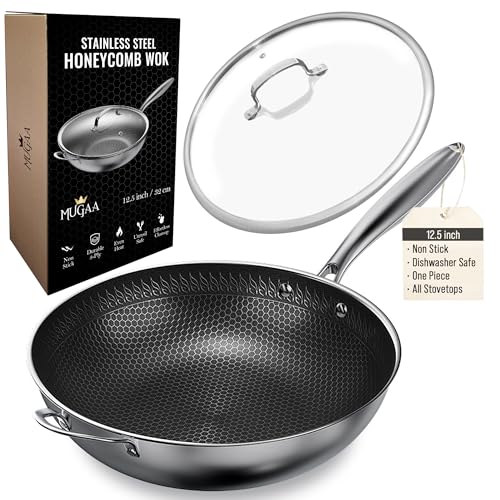
Performance of Steel, Ease of Nonstick: A heavy-duty tri-ply stainless steel core meets a laser-etched, PFOA-free nonstick surface built for metal utensils and heavy use.


Finish With Aromatics off the Heat
Why let your last move sabotage everything you’ve built? You’ve mastered high-heat cooking, nailed the quick cooking rhythm, and now you’re about to incinerate your cilantro. Don’t.
Professional wok technique demands you finish with aromatics off the heat. This restaurant technique preserves what prolonged fire destroys: volatile compounds that vanish in seconds, bright flavors that turn bitter, delicate leaves that collapse into cloying mush.
Your off-heat aromatics, work fast. Toss them in as residual warmth releases their essential oils without breaking them down. You’ll achieve texture preservation that separates home cooks from pros, that crisp-tender bite against seared protein.
Fresh herbs go in last, 10 seconds of folding suffices. Green onions stay vivid, not olive-drab and limp. Spinach wilts perfectly, not releasing a cup of sad liquid.
That’s your stir fry complete.
Recommended Products

TRADITIONAL COOKING WOK: 12.6 in. diameter wok for stir-frying, sautéing, and searing a wide variety of cuisines and ingredients

Multi-Ply Clad Stainless Steel Construction: Crafted from premium 18/10 stainless steel with a multi-element aluminum core, fully clad from base to rim—not just the bottom—for consistent heat across the entire pan. Resists high heat, corrosion, and warping, delivering professional-grade durability for everyday cooking

Excellent Heat Distribution: The Cooks Standard Stainless Steel 12-inch wok pan is made of mirror-polished 18/10 stainless steel, resistant to corrosion and wear; The aluminum disc bottom offers excellent heat conductivity for better cooking