


You grab a bottle of soy sauce and wonder why your stir-fry turns gluey while takeout lo mein stays slick. The problem isn’t your wok; it’s your sauce construction. Stir-fry demands a light cornstarch slurry, maybe 1 teaspoon per ¼ cup liquid, glossing vegetables in 90 seconds of screaming heat.
Lo mein needs double that starch, simmered gently with oyster sauce and sesame oil until it clings to noodles like a second skin. One stays bright and snappy; the other builds depth through slow absorption. Get the balance wrong, and dinner becomes either washed-out or cloying. The real question: which sauce deserves your loyalty?
Which Sauce Do You Actually Need?
So you’re standing in the sauce aisle, clutching a bottle of soy sauce and wondering which direction to take. Ask yourself what you’re actually cooking.
A stir-fry sauce suits high-heat wok work where you’re tossing vegetables and protein rapidly. You’ll add a corn starch slurry for glossy immediate thickening, keeping sauce thickness light so nothing turns cloying or soggy.
Choose lo mein sauce when coating noodles is your endgame. It’s richer, with soy-forward flavor built from Shaoxing wine, oyster sauce, and sesame oil. This sauce clings to already-cooked noodles, demanding more volume for proper moisture balance.
Your cooking technique decides this battle. Quick, dry sear; lighter sauce. Seeking that velvety, umami-heavy hug around every noodle strand, lo mein wins, no contest.
Recommended Products

A blend of Kikkoman soy sauce, sesame oil, garlic, oyster sauce, and Asian seasonings

No hydrogenated fats or high fructose corn syrup allowed in any food

Includes one 11.5 oz bottle of HOUSE OF TSANG Classic Stir-Fry Sauce to make your next meal extra delicious and flavorful


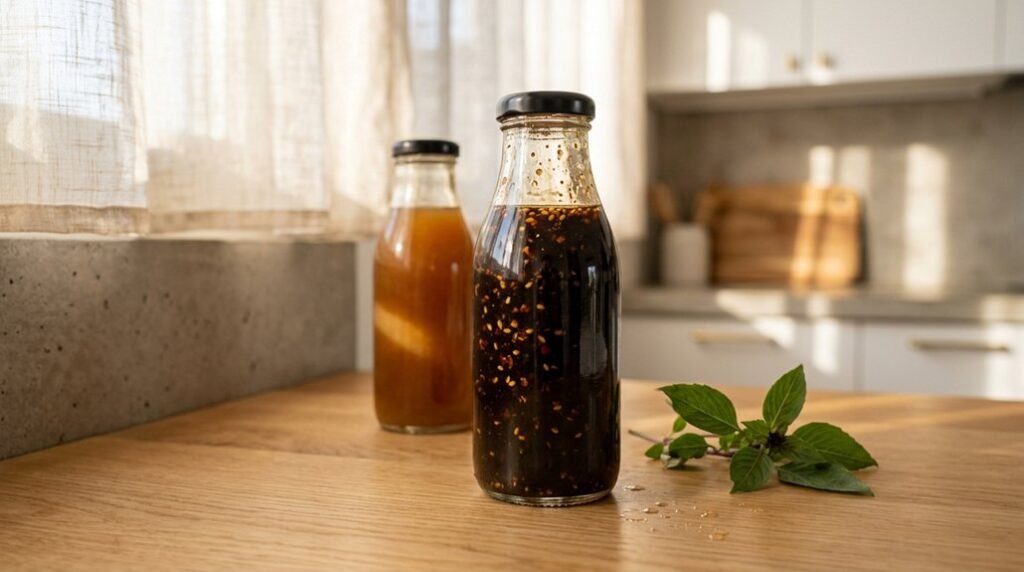
How Lo Mein Sauce Piles On vs. How Stir Fry Sauce Stays Light
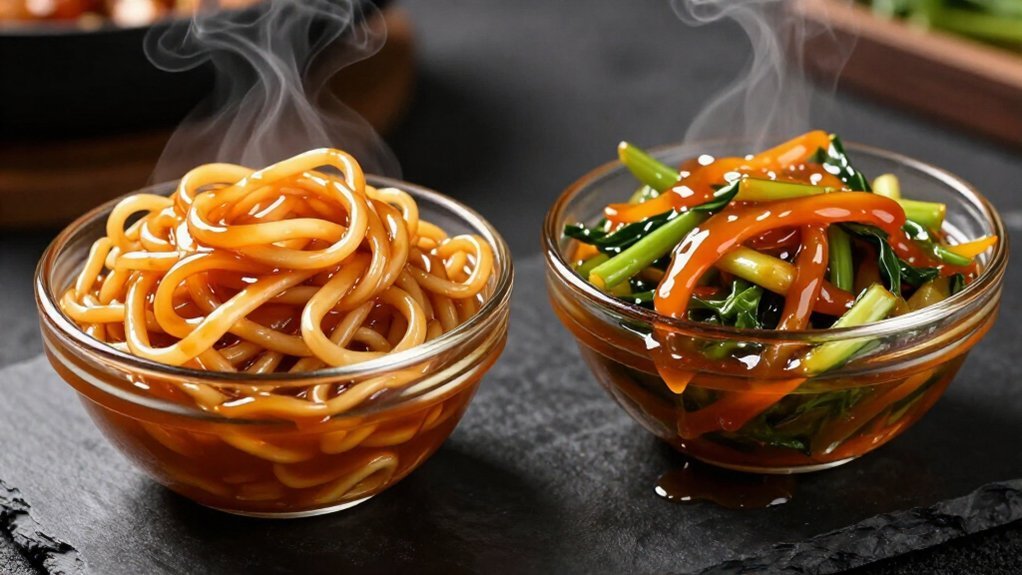
You’ve asked the right question, now comes the breakdown. When you pile on lo mein sauce, you’re accepting viscosity that turns your noodles coated into something almost rich. The sauce coating clings with purpose, creating that saucier vs lighter divide you can taste immediately. Your noodle texture becomes chewier, more yielding, because lo mein sauce carries weight: soy, oyster, sesame, sugar, all working together.
Stir-fry sauce refuses this heaviness. During wok tossing, it delivers a cornstarch gloss that prevents clumping without drowning anything. Your vegetables and proteins get quick flavor, not saturation. The sauce stays bright, nimble, almost shy. You taste umami, not coating.
Lo mein demands noodle-forward indulgence; stir-fry sauce respects your ingredients enough to step back. Choose your adventure, but choose knowingly.
Recommended Products

What You Get: One 13.5 oz. bottle of P.F. Chang’s Home Menu Sesame Sauce

Add a touch of Asian-inspired flavor to your favorite recipes with La Choy Chow Mein Noodles
Item Package Length: 5.842cm


What Your Pan and Heat Level Mean for Sauce Choice
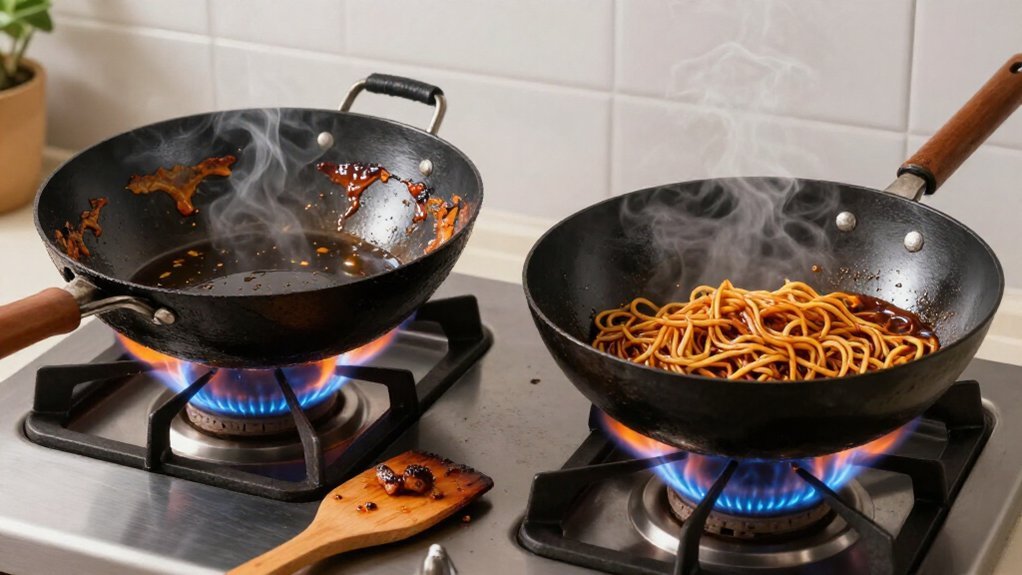
Your wok decides what your sauce can handle, and you’d better listen. A high-heat wok demands stir-fry sauce that won’t scorch or turn cloying under intense flames. You’re working fast, so your cornstarch slurry must thicken instantly, creating that perfect sauce cling without pooling. Pan heat this aggressive punishes heavy, sugary lo mein sauce; it’ll burn before you’ve tossed twice.
Lo mein sauce thrives in gentler conditions. Your cooking method here allows richer, saucier coating texture to develop slowly, wrapping each strand in glossy umami. The noodle texture matters too: soft lo mein needs more liquid, while crisp chow-mein-style demands drier results.
- High-heat wok: lighter stir-fry sauce, quick-set cornstarch, brief contact
- Moderate pan: lo mein sauce tolerates richer reduction, more total liquid
- Saucier vs drier: match sauce volume to cooking speed and final noodle texture
Recommended Products

A tangy, irresistible sauce that adds a distinct sweet n' Sour Asian flair to your meal, Primal Kitchen no soy teriyaki sauce is an Uncompromisingly delicious condiment to savor every bite

🥢 ELEVATE STIR-FRY: Elevate your stir-fry with Oriental Wok's Sesame Stir-Fry Sauce. Crafted from an authentic family recipe, this sauce transforms meals. With rich, complex flavors and perfect sweetness, it enhances chicken, shrimp, steak, or tofu for irresistibly delicious dishes.

HIGH HEAT COOKING:Suitable for high temperature cooking including stir-fry, searing, and sautéing. Designed for use in a wok or pan when cooking over medium to high heat.


5 Ingredient Swaps That Turn One Sauce Into the Other
Why settle for one sauce when your pantry’s already half-equipped for both? You can pivot between chow mein and lo mein with five strategic tweaks.
First, dial back your cornstarch: use ½ teaspoon for chow mein’s light glaze, or bump to 1 tablespoon for lo mein’s saucier glaze. Second, reduce oyster sauce by a third when making chow mein; lo mein demands the full umami hit. Third, add extra soy sauce, about 2 tablespoons, for lo mein’s bolder profile. Fourth, increase sesame oil slightly for lo mein richness, but keep it restrained for crispy noodles. Fifth, splash in ¼ cup water or stock for lo mein’s toss-and-sauce method.
Your stir-fry technique determines the winner. Chow mein rewards dry heat and minimal moisture; lo mein favors that thick, coating luxury.
Recommended Products

Bold, Balanced Flavor: ABC Sweet Soy, also known as Kecap Manis, combines coconut sugar and aged soy, naturally fermented for 6+ months to create a savory-sweet umami profile...
Build Either Sauce in Under Five Minutes
Because great flavor shouldn’t demand your whole evening, you can build either sauce before your noodles hit the pan. You need precision, not patience, for a five-minute sauce that sings.
- Stir-fry sauce: Mix two parts soy sauce to one part water, add sugar, rice wine, and a cornstarch slurry for gloss without weight; pour over fried noodles fast.
- Lo mein sauce: Combine light soy sauce and dark soy sauce with oyster sauce for umami depth, thicken with cornstarch, then toss with lo mein noodles.
- The finish: Drizzle sesame oil off heat; it lifts rather than cloys, saving dishes from mediocrity.
Skip the oyster sauce for stir-fry if you’re rushing; use it for lo mein sauce when you want that velvety cling. Either way, you’ll eat before delivery arrives.
Recommended Products

AUTHENTIC CARIBBEAN CHINESE FLAVOR Inspired by bold Caribbean Chinese cooking, this savory sauce helps recreate restaurant-style lo mein, chow mein, stir fry and fried rice dishes at home with rich flavor, satisfying depth and a distinctive takeout-style taste the whole family can enjoy.

Made using 8 fruits and vegetables for a complex, savory flavor that's unmatched

Savour Authentic Japanese Yakisoba Noodles at Home - Used for Yakisoba, fried rice, chow mien, stir-fries, our versatile sauce pairs effortlessly with vegetables, chicken, pork, beef, shrimp, and noodles, allowing you to create an endless variety of delicious stir fry dishes. And with each 17.6 oz (500g) bottle containing approximately 14 servings, you can enjoy authentic Japanese flavors in the comfort of your own home time and time again.