


You think you know noodles until a menu forces you to choose. Chow Mein promises wok hei and crackle, Lo Mein offers gloss and give. That $12.95 decision carries weight.
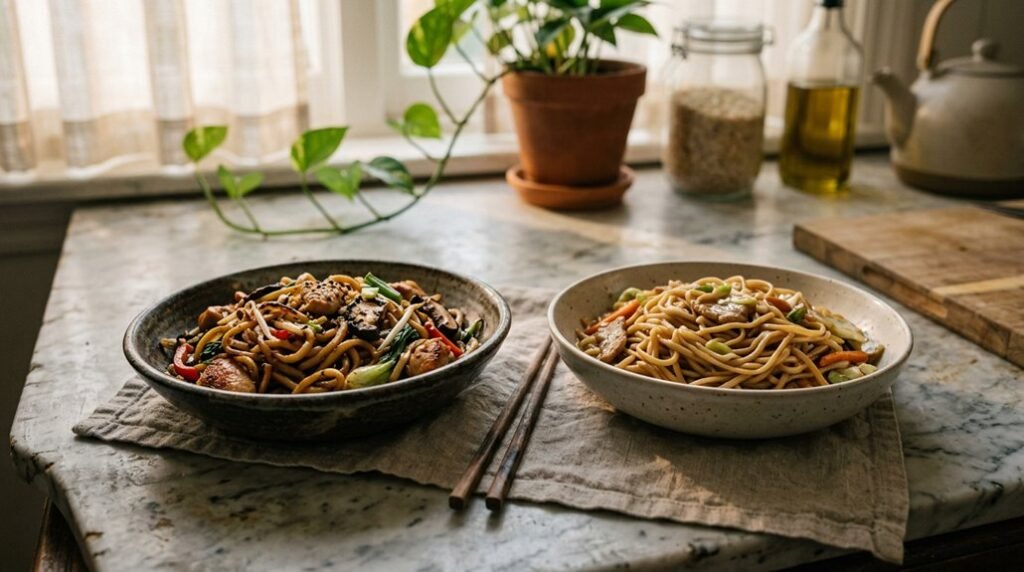
One dish arrives blistered, barely sauced, shouting with carbonized edges. The other pools with soy and oyster depth, each strand coated like silk. Your craving knows the answer. The kitchen holds the secret.
How You Cook the Noodles Changes Everything
Although you might think noodles are just noodles, the cooking method completely changes what ends up on your plate. You’ll notice this immediately when you compare stir-fry techniques side by side.
With chow mein, you’re pre-soaking dried noodles in hot water for roughly three minutes, then hitting the wok over ripping-high heat, around 500°F. You’re frying the noodles directly; you’re chasing that elusive wok hei, those charred crisp edges that deliver serious umami without cloying heaviness. The noodles texture you’re after balances crunch and chew in each bite.
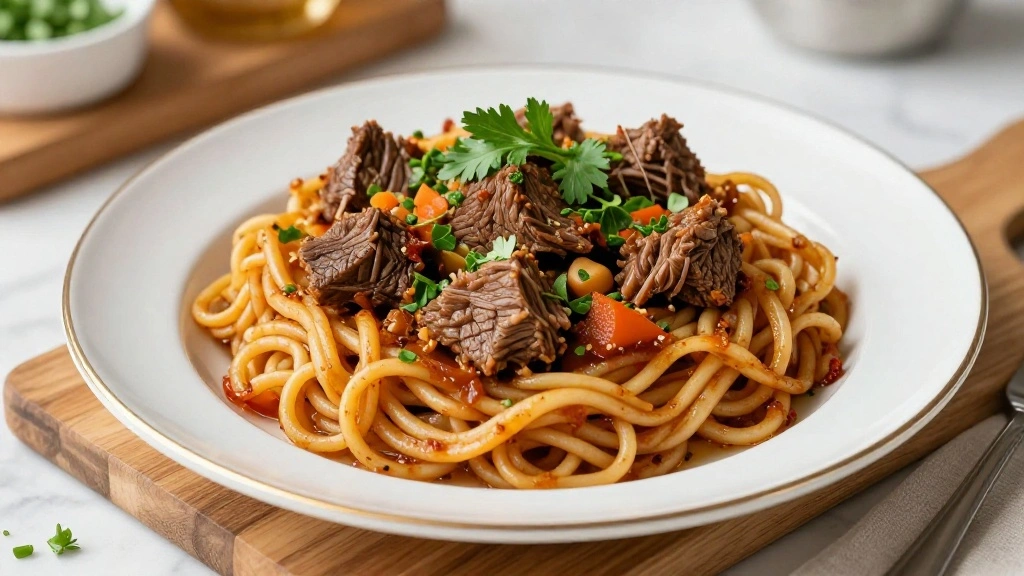
Lo mein demands patience you’ll test. You boil fresh noodles until fully tender, drain them thoroughly, then toss them into the wok with vegetables and proteins already cooked. Your sauce coats evenly; you get slippery, saucier results. It’s chewier, more yielding, sometimes too soft if you overdo it.
Recommended Products

Asian style chow mein stir-fry noodles

Add a touch of Asian-inspired flavor to your favorite recipes with La Choy Chow Mein Noodles

Add a touch of Asian-inspired flavor to your favorite recipes with La Choy Chow Mein Noodles


The Texture Difference: Crispy Chow Mein vs. Soft Lo Mein
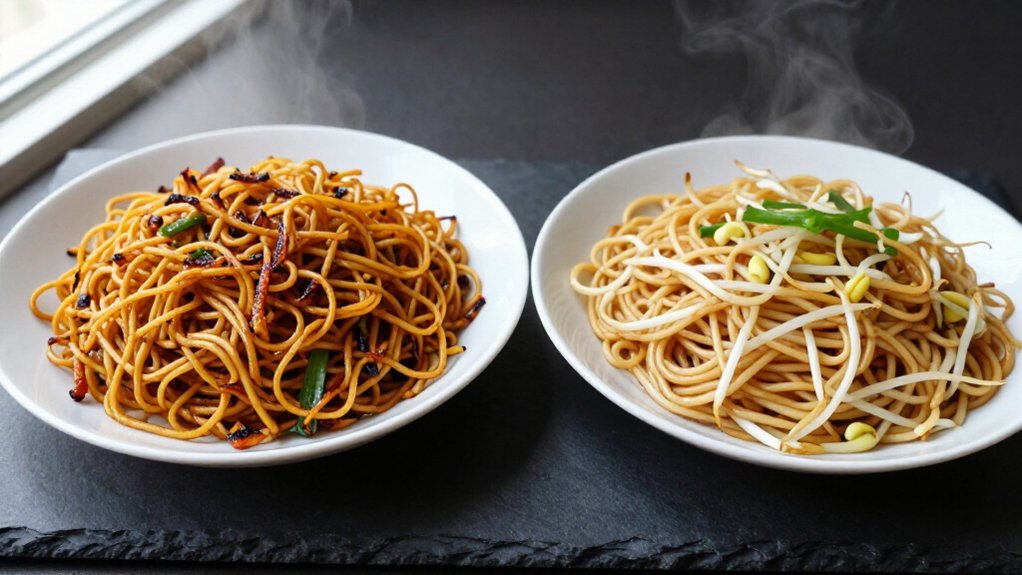
That difference in cooking method, you feel it before you even take your first bite. When you pick up a forkful of Chow mein, you encounter resistance: a snap, a crackle, noodles that fight back. The texture demands your attention, whether they’re fried into a golden pancake or flash-cooked until they sing against your teeth. You taste oil, sure, but also intention. There’s nothing cloying here, no soft surrender.
Lo mein offers you the opposite promise. These noodles yield immediately, plump and sauce-laden, practically melting. You’ve traded crisp for comfort, and sometimes that’s exactly right. But let’s be honest: when you want that satisfying crunch, that textural drama, Chow mein delivers without apology.
The egg noodles in both could theoretically swap places, but they won’t. Handling makes destiny, and here, destiny crunches.
Recommended Products

Dried egg noodles made from egg white only.

Wel Pac Lo Mein Noodles is the smoothest, quickest cooking Asian-style noodle


Why Lo Mein Carries More Sauce Than Chow Mein
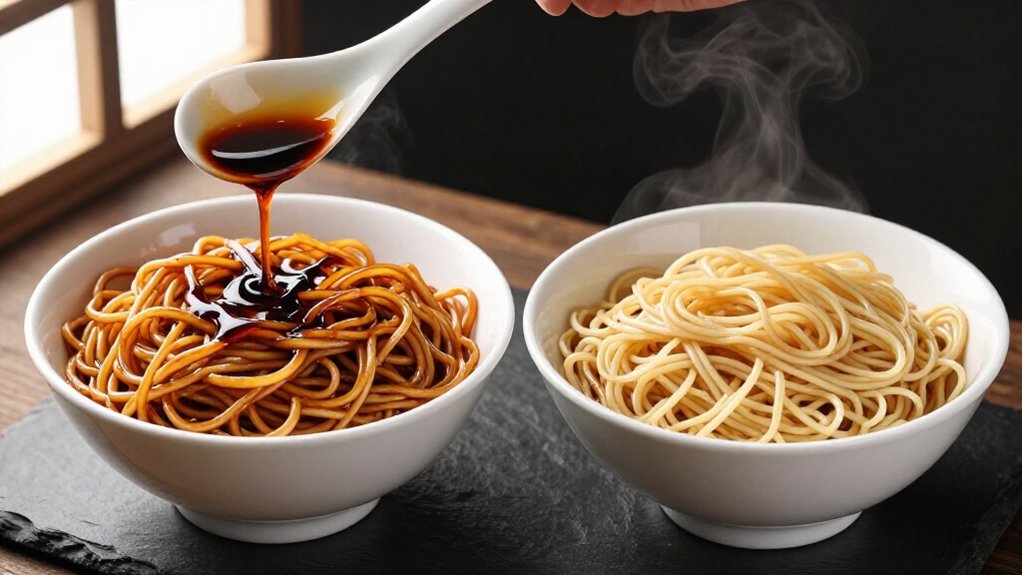
The sauce tells you everything you need to know before your chopsticks even touch the bowl. You’ll notice Lo Mein sauce clings thickly to every strand, coating each noodle in glossy, umami-packed heaven. Because you toss fully cooked, drained noodles with generous amounts rather than cooking them in it, the sauce becomes integral to the dish’s identity. Your noodles absorb that savory depth, yielding a plumper, silkier noodle texture that practically slides down your throat.
Meanwhile, the stir-fry method demands restraint. When you’re flash-frying noodles over blazing heat to preserve crispness, excess sauce turns cloying and heavy. It dampens that essential char, leaving you with limp disappointment. Chow Mein sauce acts as whispered accent, not shout. You’re getting maybe two tablespoons versus Lo Mein’s half-cup hug. Choose wisely, or don’t, we all have our moods.
Recommended Products

CRISP & DELICIOUS - Crispy and Delicious Wide & Airy Chow Mein Noodles

Crispy and Delicious Thin Chow Mein Noodles

CRISPY. GOLDEN. AUTHENTIC.:Crispy fried noodles with golden authentic crunch. Light, crispy, and full of flavor, made to bring classic chow mein texture to your favorite dishes.
What Goes in Each Dish: Typical Ingredients and Toppings
What separates these two dishes isn’t just technique; it’s what actually lands in your bowl. With Chow Mein, you’re getting noodles fried in oil right alongside your proteins and vegetables, everything mingling in the wok until some strands turn crisp, others stay tender. You’ll find pork, chicken, or shrimp sharing space with bok choy, carrots, bean sprouts, and cabbage, all coated in light sauces that never turn cloying.
Lo Mein takes a different path. Your noodles arrive fully cooked and soft, then get tossed with pre-stir-fried components: broccoli, bell peppers, onions, snap peas, mushrooms, plus beef, chicken, shrimp, or tofu. The sauce matters more here; it clings to every strand, creating that glossy, umami-heavy coating you crave.
The real distinction? Chow Mein celebrates the fried noodles themselves, crispy or not. Lo Mein lets toppings and sauce steal the show.
Recommended Products


The information below is per-pack only
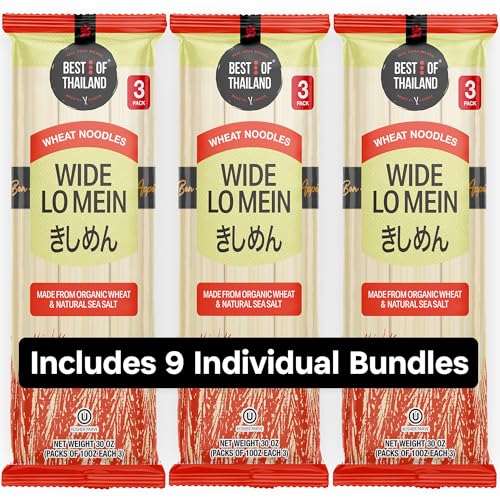
Best Of Thailand Noodles


Which Noodle Style Should You Choose for Your Craving?
So you’re standing at the counter, menu in hand, and your stomach’s already made up its mind: it wants noodles, but which kind? Listen to your craving. If you’re chasing that shatter-crisp bite, the kind that crackles against your teeth before yielding to savory umami, order Chow mein. Those semi-fried strands, blistered in screaming-hot oil, deliver texture that refuses to go soggy. The fry technique seals the deal.
But maybe you want saucing that clings, smooth and unctuous, coating every strand in glossy comfort. That’s lo mein’s territory: fully cooked noodles tossed in a velvety bath, no crunch required. Both use wheat egg noodles, yet they diverge completely in method.
Wheat-free? Skip both, grab mei fun. Rice noodles play by different rules entirely.
Recommended Products


Savory Teriyaki Chicken flavor for a delicious and satisfying meal
dry seasoning