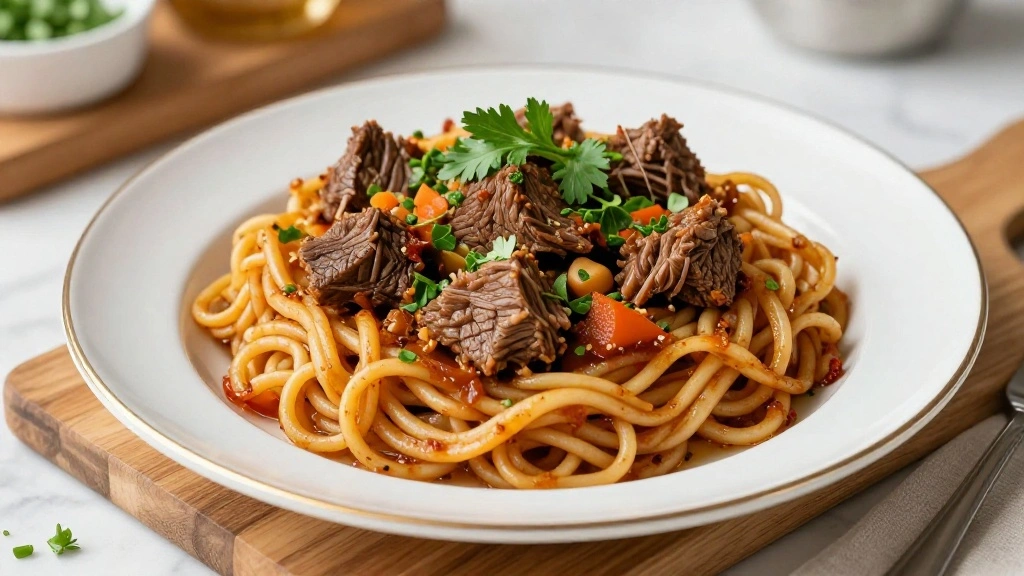

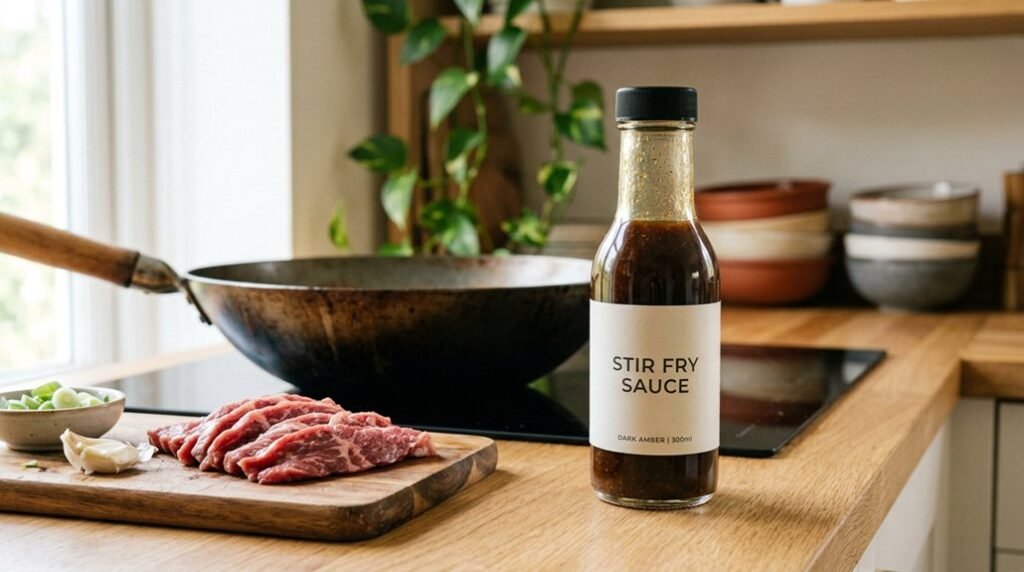


Americans spend roughly $3,000 annually on takeout, yet your kitchen holds everything needed to surpass that $14 Mongolian beef. You will build sauces balancing umami depth against cloying sweetness, starting with a base of 3 tablespoons low-sodium soy sauce and 1 cup beef stock, thickened with a cornstarch slurry at 1 tablespoon per cup of liquid.
The best versions layer garlic, ginger, and sesame oil, but one secret ingredient separates restaurant lacquer from home-cooked mediocrity. You probably already own it.
Build a 5-Part Beef Stir Fry Sauce From Scratch
What’s the secret to a beef stir-fry that doesn’t just sit in a pool of hopelessness on your plate? You build a sauce that clings, not cloys.
Start with low-sodium soy sauce as your foundation, about half a cup, then add beef stock for body. You’ll want garlic-ginger aromatics, minced fresh, not the jarred stuff that tastes like regret. Sweeten with honey or brown sugar, just a tablespoon, and thicken with a cornstarch slurry, two teaspoons dissolved in water. Shake it all in a jar. That’s your five-part base.
For depth, you’ll add sesame oil, maybe oyster sauce or Shaoxing wine if you’re feeling fancy. This mixture keeps for a week in your fridge. Use one cup per pound of beef, cooking meat first, then vegetables, then tossing everything with your sauce until it glazes.
Recommended Products

Teriyaki marinade and sauce is great for adding to veggies, meat or chicken

Savory flavor and umami richness without gluten

Restaurant quality low sodium teriyaki sauce perfect for marinades, fried rice and stir fries.


Make the Classic Garlic-Ginger Version in 10 Minutes
Ten minutes stands between you and a sauce that actually understands what beef needs. You whisk low-sodium soy sauce with chicken broth, minced garlic, and grated ginger, then add your sweetener of choice. A cornstarch slurry thickens everything to that perfect glossy coat.
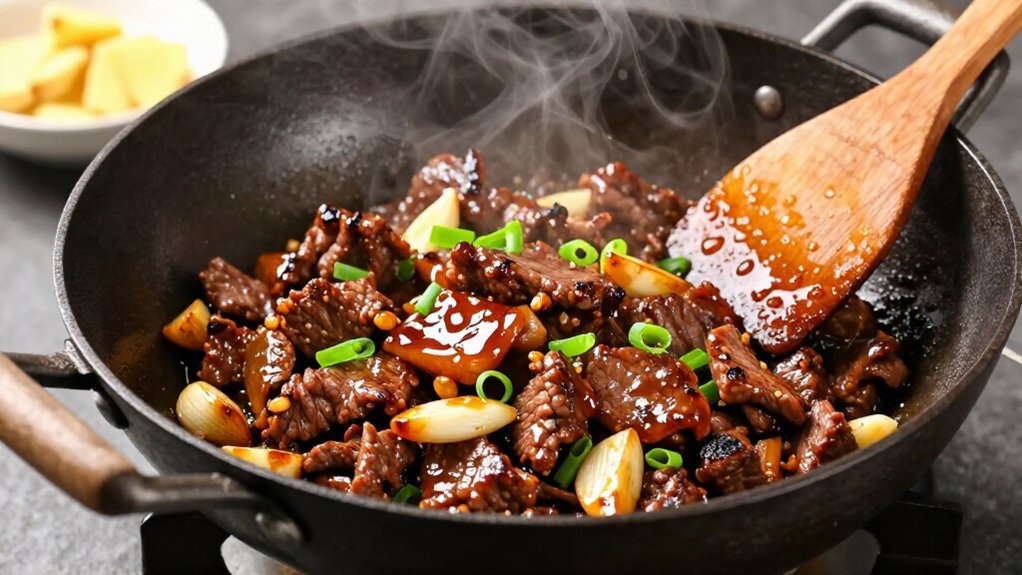
Restaurant-worthy glaze in ten minutes flat: soy, garlic, and ginger doing the heavy lifting while you just whisk.
Cook thinly sliced beef in screaming-hot oil, toss in vegetables until crisp-tender, then pour this liquid gold over everything. Let it simmer until the beef wears that restaurant sheen like it was born to it.
The umami hits first, then garlic warms your palate without bullying it, and ginger keeps the whole thing from turning cloying. Need gluten-free? Swap tamari for soy sauce; nothing else changes.
Make a double batch. Store it a week in the fridge, or freeze for three months. Your future self will thank you.
Recommended Products

Flavorful Infusion: KA-ME Stir-Fry Oil is infused with the delightful flavors of garlic and ginger, adding a burst of taste to your dishes

What You Get: One 13.5 oz. bottle of P.F. Chang’s Home Menu Sesame Sauce

Product Type:Grocery



Add Black Pepper for Restaurant-Style Heat
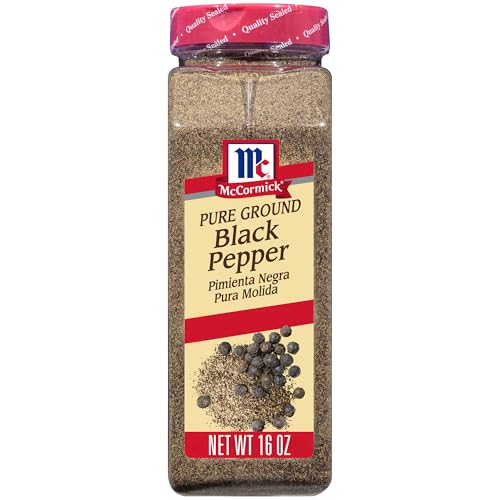
Why settle for flat heat when you can build something with actual dimension? Freshly ground black pepper delivers sharp, pungent heat that complements beef’s richness without bulldozing other flavors in your stir fry sauce.
For restaurant-style results, don’t just crack pepper at the finish. Bloom it in hot oil for 15–20 seconds before adding beef, releasing essential oils that permeate the entire dish.
Then incorporate another dose, about 1/4 to 1/2 teaspoon per pound of meat, while your sauce simmers; this ensures even distribution of aroma and fire.
Soy-based stir fry sauce pairs brilliantly here. The saltiness amplifies pepper’s spiciness, creating balanced umami-meets-heat synergy without becoming cloying.
You’re not just adding heat; you’re constructing layered complexity. That’s the difference between home cooking and the real deal.
Recommended Products

No hydrogenated fats or high fructose corn syrup allowed in any food


A blend of Kikkoman soy sauce, sesame oil, garlic, oyster sauce, and Asian seasonings


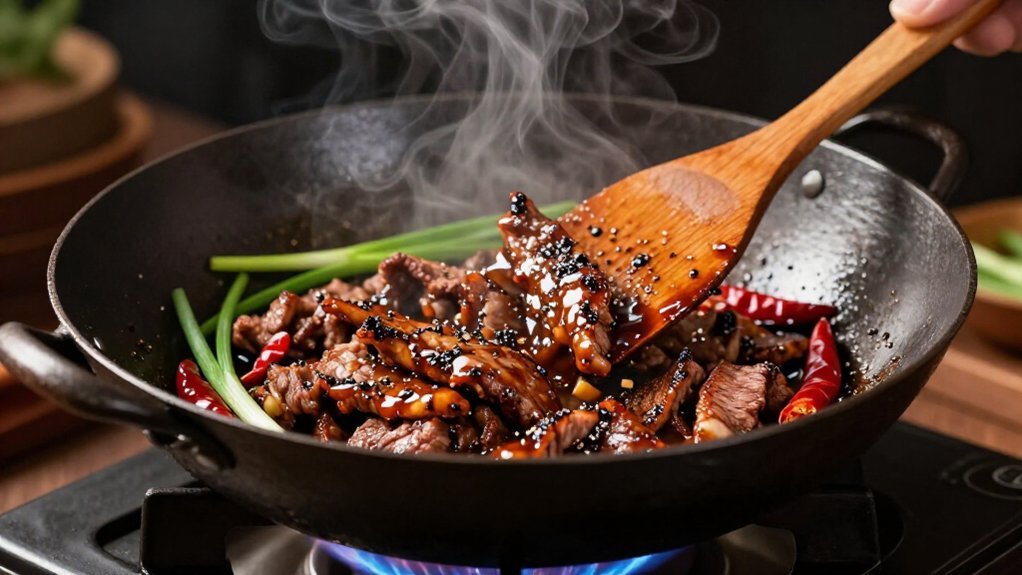
Sweeten With Brown Sugar for Mongolian-Style Glaze
You’ll want to nail the brown sugar balance first, because two tablespoons of dark brown sugar per quarter cup of soy sauce hits that sweet spot between rich caramel depth and cloying overload. For the Mongolian glaze technique, you’re building a lacquer, not a soup, so you’ll simmer briskly until the sauce tightens into a glossy coat that clings to every slice of flank steak without pooling in the bowl.
Wait until the final ninety seconds to pour it over your beef, because nobody wants a sticky, burnt mess when you’re aiming for restaurant-worthy sheen.
Recommended Products

Contains one 14.5-ounce bottle of La Choy Teriyaki Stir Fry Sauce & Marinade

Rich Umami Flavor – Crafted with the finest oyster extract, this sauce delivers a robust and balanced umami flavor, that is both savory and sweet, enhancing the natural flavors of meats, vegetables, and other ingredients. Its rich, savory taste adds depth and complexity to dishes, elevating everyday meals to restaurant-quality creations.

Rich Umami Flavor – Crafted with the finest oyster extract, this sauce delivers a robust and balanced umami flavor, that is both savory and sweet, enhancing the natural flavors of meats, vegetables, and other ingredients. Its rich, savory taste adds depth and complexity to dishes, elevating everyday meals to restaurant-quality creations.
Brown Sugar Balance
Ever wonder why your homemade Mongolian beef doesn’t hit like takeout? You’re probably skimping on the brown sugar. That deep, molasses-like sweetness gives a flat sauce the depth that makes it restaurant-worthy.
White sugar makes your glaze thin and cloying, but brown sugar brings moisture and body that clings to every slice of beef. You need that sticky, glossy finish. When you simmer brown sugar with soy sauce and garlic, you build layers of umami that white sugar simply cannot deliver. The molasses notes don’t just sweeten; they round out the savory edges, creating balance rather than sugar overload.
Pair it with rice vinegar and sesame oil. Simmer until thick, then toss. Your beef finally wears its sauce like a coat, not a puddle. That’s the difference you taste.
Mongolian Glaze Technique
Brown sugar’s magic becomes undeniable once you try building a proper Mongolian glaze from scratch. You combine soy sauce and brown sugar, watching the mixture bubble into something glossy and dangerous. The caramelization happens fast, so you stay alert.
You’ll want to simmer this separately first, thickening it to a coatable consistency before introducing your seared beef. Toss too early, and you get a soupy mess. Wait too long, and the sugar burns bitter.
Brown sugar keeps this from becoming cloying, adding depth that balances the umami punch from soy sauce and beef drippings. A splash of rice vinegar cuts through the richness. The result clings to every strip, lacquered and restaurant-worthy. You didn’t know weeknight beef could look this professional.


Swap in Chili Oil for Sichuan-Inspired Spice
How do you get restaurant-quality heat without hunting down fresh Sichuan chilies? You swap in chili oil, and you change your stir-fry sauce into something that actually bites back.
Chili oil delivers that Sichuan capsaicin warmth without the hassle of sourcing dried peppers. Drizzle 1 to 2 teaspoons into your soy-based base, and you get glossy, restaurant-style coating plus sesame and garlic depth. You do not want cloying heat, so start small and build. The umami gets sharper, the sauce clings better, and your beef finally tastes deliberate rather than desperate.
Balance this fire properly. Add a splash of rice vinegar and a teaspoon of honey or maple syrup. This mirrors classic Sichuan-style sauces, taming the oil’s aggression without killing its personality. You control the damage, and you land exactly where you meant to.
Recommended Products

MOUTHWATERING MONGOLIAN SAUCE: San-J’s Gluten Free Mongolian Sauce is the fastest, easiest and tastiest way to make authentic, restaurant-quality Mongolian Beef at home and the unique taste even goes great in dips, sandwich spreads all the way to noodle bowls and salads alike

MOUTHWATERING MONGOLIAN SAUCE: San-J’s Gluten Free Mongolian Sauce is the fastest, easiest and tastiest way to make authentic, restaurant-quality Mongolian Beef at home and the unique taste even goes great in dips, sandwich spreads all the way to noodle bowls and salads alike

Includes one 11.5 oz bottle of HOUSE OF TSANG Classic Stir-Fry Sauce to make your next meal extra delicious and flavorful


Deepen Flavor With Oyster Sauce and Shaoxing Wine
Where does that rich, glossy depth come from in your favorite Chinese takeout beef? You’re tasting the power couple of oyster sauce and Shaoxing wine working their magic.
Oyster sauce delivers serious umami, that savory fifth taste that makes beef taste more like itself. It’s thick, slightly sweet, and gloriously salty without becoming cloying. Shaoxing wine, meanwhile, does double duty: it tenderizes your meat while adding aromatic complexity with subtle nutty sweetness.
Umami depth meets tender complexity: oyster sauce brings the savory richness, Shaoxing wine adds aromatic sweetness that transforms beef.
Together, they create restaurant-quality depth you can’t fake. Start with one to two tablespoons of oyster sauce and one to two teaspoons of Shaoxing wine per pound of beef.
Taste and adjust; this isn’t chemistry class, and you know your palate. No Shaoxing wine on hand? Dry sherry works in a pinch. You’re building layers, not following scripture.
Recommended Products


10 oz organic reduced sodium shoyu soy sauce

Like all our sauces, we use only the highest quality ingredients and never any artificial colors or flavorings
Adjust Your Base for Dietary Needs and Pantry Gaps
You’ve nailed the flavor foundation, now let’s talk about keeping it real when your pantry throws you a curveball or your dinner guests bring dietary restrictions to the table. Swap ordinary soy sauce for Tamari or coconut aminos, you’ll keep that deep umami without the gluten baggage. Both deliver savory depth, though coconut aminos run slightly sweeter and pricier at roughly $6-8 per bottle.
When your cornstarch disappears, reach for arrowroot as your gluten-free thickener. Use one tablespoon arrowroot per one and a half tablespoons cornstarch, or your sauce turns cloying and gummy.
No beef broth? Low-sodium chicken broth works, or even water in a pinch. For vegan guests, ditch the honey for maple syrup and swap beef stock for vegetable. Brown sugar substitutes adequately but lacks complexity.
Recommended Products

Flavor Without Discomfort: Stir fry without the stir up. Our Low FODMAP Sesame Ginger Sauce and Marinade is deliciously designed for people living with IBS - made without onion or garlic and packed with clean ingredients like avocado oil, ginger and Himalayan pink salt
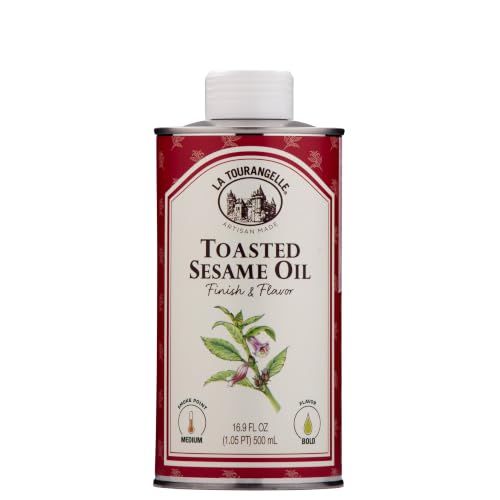
A Traditional Touch: Sesame oil has long been giving its characteristic flavor to traditional Asian food. Discover the complex and award winning flavor of our Toasted Sesame Oil for a distinct flavor in stir-fry, fried rice, noodles or marinades.

A Traditional Touch: Sesame oil has long been giving its characteristic flavor to traditional Asian food. Discover the complex and award winning flavor of our Toasted Sesame Oil for a distinct flavor in stir-fry, fried rice, noodles or marinades